The Immigrant Paradox
Both sides of this debate have a point

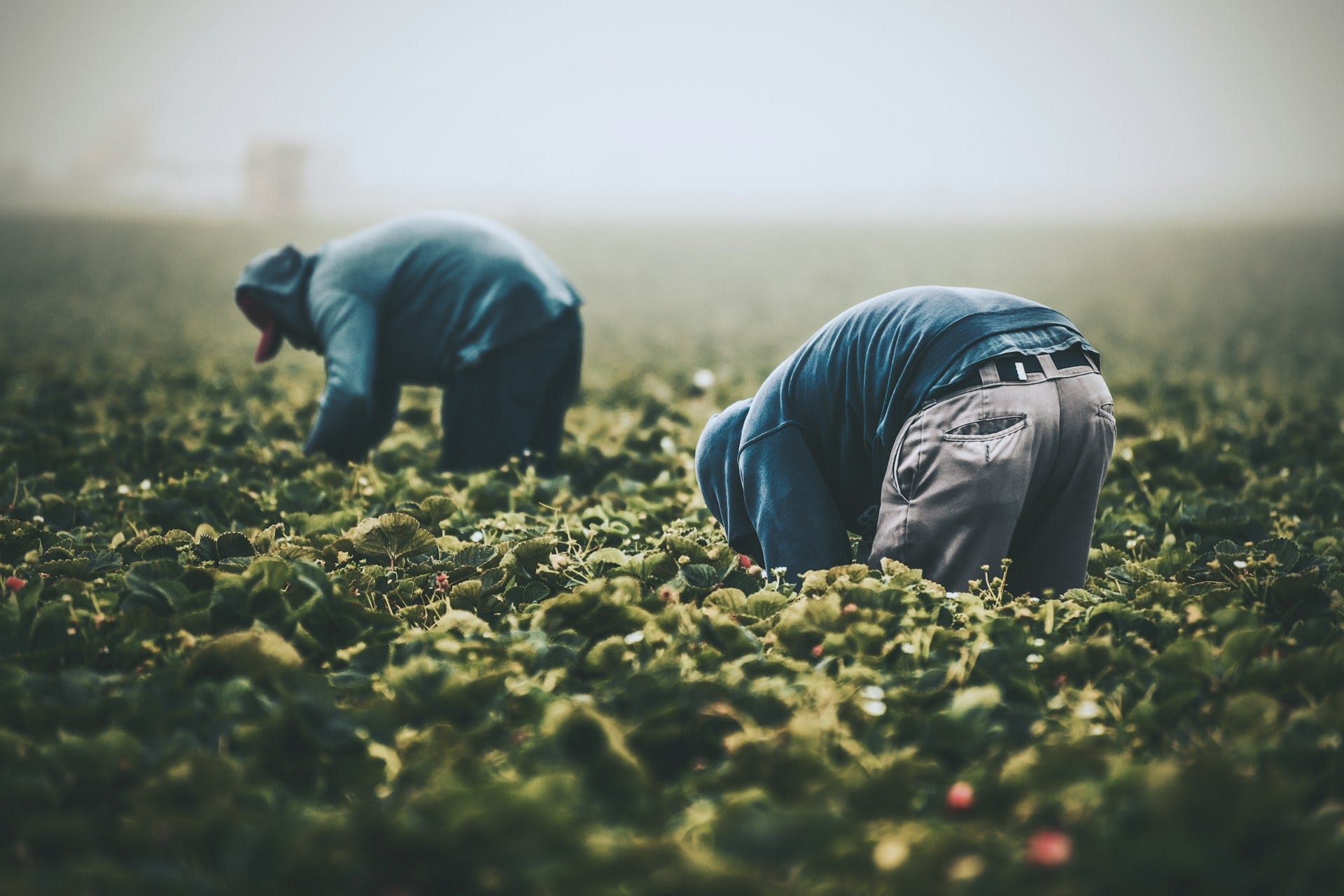
Photo by Tim Mossholder on Unsplash
If there has been one golden thread which has passed through the political ruptures of many Western polities in the past decade or so, it is the thorny matter of immigration. Governments have fallen, power centres have shifted, cruelties have been meted out and positions have hardened. Other important policies around education or health, for instance, have become secondary, lost in the shouting about immigrants and what should be done about them.
In the grand tradition of fearing things we don't quite understand—like cryptocurrency or TikTok dances—Western societies have perfected the art of immigration anxiety. Not always without reason, but often overblown into grotesquery.
In 2019, a young and upcoming economist, Stefanie Stantcheva, wrote a paper about perceptions of immigrants, based on an exhaustive survey she had conducted with 25,000 people in the US and major European economies. The survey interview took about 25 minutes and was meticulously designed to make objective measurements of what people believe versus reality.
Her research reveals a collective misunderstanding that would be impressive if it weren't so consequential. Across six developed countries, natives consistently overestimate the immigrant share of the population by roughly double. In the United States, people believe immigrants make up about 36% of the population when the actual figure hovers around 14%. That's not just being bad at maths—that's seeing two immigrants and mentally photocopying them into more than four.
And then there are the misperceptions and false beliefs when discussing immigrant characteristics. Stantcheva's surveys show that natives systematically believe immigrants are less educated, more unemployed, and more reliant on government transfers than they actually are. It's as if we've collectively decided to imagine immigrants as characters from a Charles Dickens novel, perpetually asking for more gruel from the welfare state.
This trope—imagining immigrants as 'welfare queens', fleeing their home countries to suck at the teat of their new government’s largesse—is widespread. The reality, as Stantcheva and others have documented, is more mundane. Immigrants typically contribute more in taxes than they consume in government benefits over their lifetimes. In fact, first-generation immigrants often use fewer welfare benefits than native-born citizens, possibly because navigating bureaucracy in a second language whilst trying to prove seventeen different forms of residency is nobody's idea of a good time.
The research shows that even when immigrants do access benefits, they're usually working—often in jobs that natives have thoughtfully decided they'd rather not do. It turns out that picking strawberries in scorching heat or cleaning office buildings at 3 AM doesn't actually make one lazy; it makes one exhausted.
Immigrant crime, often used as a political cudgel, is also often inflated in native imaginations. Areas with higher immigration often see drops in both violent and property crime. People who uproot their entire lives to move to a new country are generally trying to build something, not burn it down. But there is a caveat here. This is true of first-generation immigrants, many fleeing from violence back home, but less convincing when measuring the crime rate of the secondary and tertiary generations, evident recently in some immigrant neighbourhoods in France, Germany, the UK and other countries. Reasons for later-generation crime are presumably politically and socially complex, but it is still a disturbing fact.
This brings us to the other side of the immigration coin: not all concerns are fantasy. Cultural change is real and its impact on native populations unsettling, and pretending otherwise is to put one's head in the sand.
Nation-states are traditionally bound by culture—the result of geography and historical conquest, sometimes with religious roots. The concept of being French or English or American or Japanese has also always been emotional and societal glue—there are both implicit and explicit expectations of cultural familiarity with our fellow citizens. It is far too simple-minded to accuse cultural defenders of being isolationist or myopic or fearful, as is often argued by those supporting a more open immigration policy.
A nation based on Judeo-Christian principles is rightly protective of those principles, as is a nation based on Islamic or Buddhist principles. Similarly, there are countries protective of individual rights versus those who prefer to give up those rights in return for other rewards, like the security of unanimity. Immigrants from one country to another will not find a welcome mat unless there is some attempt at assimilation.
What we have seen is that the expectation that immigrants with other worldviews would assimilate (or at least assimilate enough) has not always been met. Many have no wish to do so and would rather that their hosts come over to their worldviews. The political friction from that divide has fuelled the fire that has led to much of the right-wing ascendancy in many Western countries.
Even if the misperceptions about the number of immigrants, crime, welfare and the rest of the tropes were rectified, the cultural matter remains. That is the paradox for which there is no easy solution.
(Ms. Stantcheva was awarded the 2025 John Bates Clark Medal by the American Economic Association (AEA). This prestigious honour recognises economists under the age of 40 who have made significant contributions to economic thought and knowledge. She was recently interviewed on the podcast 'People I Mostly Admire'.)
Steven Boykey Sidley is a professor of practice at JBS, University of Johannesburg and a partner at Bridge Capital and a columnist-at-large at Daily Maverick, Daily Friend and Currency News. His new book "It's Mine: How the Crypto Industry is Redefining Ownership" is published by Maverick451 in SA and Legend Times Group in UK/EU, available now
Nice one. Boykey!